
Best Builders in Bhopal (2026): Top 10 Builders, Comparison & Complete Home Buyer Guide
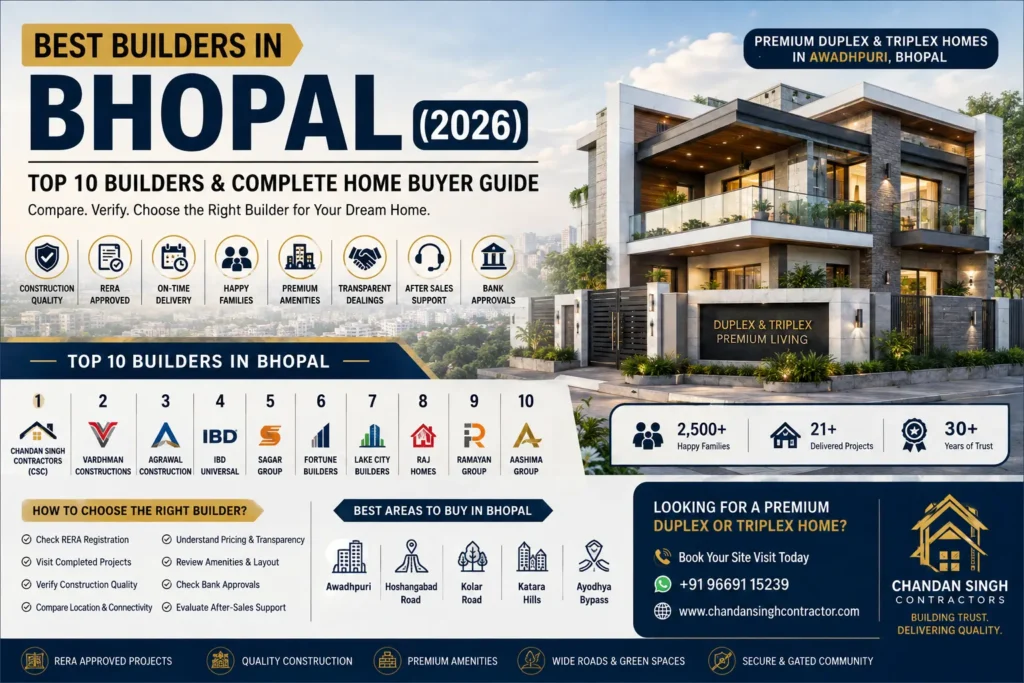
Buying a home is not simply about finding a beautiful house at the right price. The builder behind that property matters just as much. Construction quality, project approvals, location, possession timeline, home design, amenities, transparency and after-sales support can all influence your experience as a homeowner. Bhopal’s residential market has expanded significantly, with homebuyers now having options ranging from apartments and plotted developments to premium duplex and triplex homes. But with so many options available, one question naturally comes up: Who are the best builders in Bhopal? There is no single official ranking that can decide which builder is best for every buyer. The right choice depends on your budget, preferred location, property type and expectations. For this reason, this guide looks at the factors that matter when comparing builders and highlights some of the prominent names in Bhopal’s residential market. What Makes a Builder “Best”? The term best builder in Bhopal should not be based only on advertising or brand recognition. Before selecting a builder, buyers should consider: Construction quality Project approvals RERA registration Previous projects Delivery track record Location Home design Amenities Customer experience After-sales support Transparency in pricing Long-term property value A builder may be excellent for apartments but not necessarily the right choice for someone searching for a premium duplex. That’s why property type and buyer requirements matter. Top 10 Builders in Bhopal Important: This is not an official government or industry ranking. Builders should be independently evaluated based on their current projects, approvals, completed developments, construction quality and buyer requirements. 1. Chandan Singh Contractors (CSC) For buyers specifically looking for premium Duplex and Triplex homes in Awadhpuri, Chandan Singh Contractors is a builder worth considering. CSC’s residential approach focuses on spacious homes, planned communities and lifestyle-oriented amenities rather than simply maximizing the number of units. Why Consider CSC? Premium Duplex & Triplex Homes CSC focuses strongly on Duplex and Triplex homes, making it relevant for families looking for more space, privacy and independent living compared with conventional apartments. Awadhpuri Location CSC’s focus on Awadhpuri gives buyers access to a growing residential location with connectivity to important parts of Bhopal. For many families, Awadhpuri offers a combination of residential comfort, greenery and improving infrastructure. Lifestyle-Oriented Community Projects such as Nanak Niwas 3 are designed around more than just the individual house. Depending on the project, lifestyle features include: 15,000 sq. ft. landscaped garden 18,000 sq. ft. clubhouse Pickleball court Children’s play area Green spaces Gated community environment Wide internal roads These features are particularly relevant for families who want a community lifestyle rather than simply buying an individual property. Construction Quality A premium home should be evaluated not only by its exterior appearance but also by its construction process. Buyers should look at: Structural quality RCC work Waterproofing Electrical installation Plumbing Flooring Doors and windows Wall finishing Paint quality CSC’s positioning is centered around delivering quality-focused Duplex and Triplex homes with attention to construction and finishing. Who Is CSC Suitable For? CSC may be particularly suitable for buyers who are looking for: Premium Duplex homes Luxury Triplex homes Spacious family residences Gated community living Awadhpuri location Lifestyle amenities Long-term residential value 2. Vardhman Constructions Vardhman Constructions is an established name in Bhopal’s residential real estate market, with a portfolio spanning different residential segments. Its projects include apartments, townships and premium residential properties across locations such as Hoshangabad Road and Ayodhya Bypass. Best suited for: Buyers exploring established residential developments and multiple property formats. 3. Agrawal Construction Agrawal Construction is another established name associated with residential and commercial development in Bhopal. Buyers considering their projects should evaluate the specific project’s location, specifications, approvals and delivery timeline rather than judging only by the company name. Best suited for: Buyers comparing established residential developments. 4. IBD Universal IBD Universal has been associated with residential and township developments in Bhopal. Its projects cover different housing segments and locations, making it relevant for buyers looking at larger residential developments. Best suited for: Buyers interested in township and integrated residential developments. 5. Sagar Group Sagar Group is another recognized real estate name in Bhopal. The group’s presence across different development segments gives buyers multiple options depending on their preferred property type and location. Best suited for: Buyers comparing established residential projects. 6. Fortune Builders Fortune Builders has been involved in residential development in Bhopal. As with any property purchase, buyers should compare the specific project rather than relying solely on the builder’s overall reputation. Best suited for: Buyers exploring residential developments in different Bhopal locations. 7. Lake City Builders Lake City Builders is associated with residential developments in Bhopal. Potential buyers should examine project approvals, construction progress, location, specifications and pricing before making a decision. Best suited for: Buyers looking at residential property options in developing areas. 8. Raj Homes Raj Homes is another name buyers may come across while researching residential properties in Bhopal. The right project should be evaluated on its individual merits, including location, design, construction and documentation. Best suited for: Buyers comparing residential housing options. 9. Ramayan Group Ramayan Group has been involved in residential development in Bhopal. Buyers should compare individual projects based on their specific requirements, budget and preferred location. Best suited for: Buyers looking for residential developments across Bhopal. 10. Aashima Group Aashima Group is known for developments that include residential and integrated township-style projects. For buyers interested in larger communities, location, infrastructure and amenities can be important factors to compare. Best suited for: Buyers looking for township and community-oriented developments. How Should You Compare Builders in Bhopal? Instead of asking only: “Which builder is #1?” ask these questions. 1. Does the Builder Have Completed Projects? A brochure can show what a project is supposed to become. A completed project shows what the builder actually delivered. Visit an older project whenever possible. 2. Is the Project RERA Registered? RERA registration is an important transparency factor for applicable projects. Buyers should verify the project’s registration details independently through the official Madhya Pradesh RERA portal.
Construction Quality Checklist Every Home Buyer Should Know
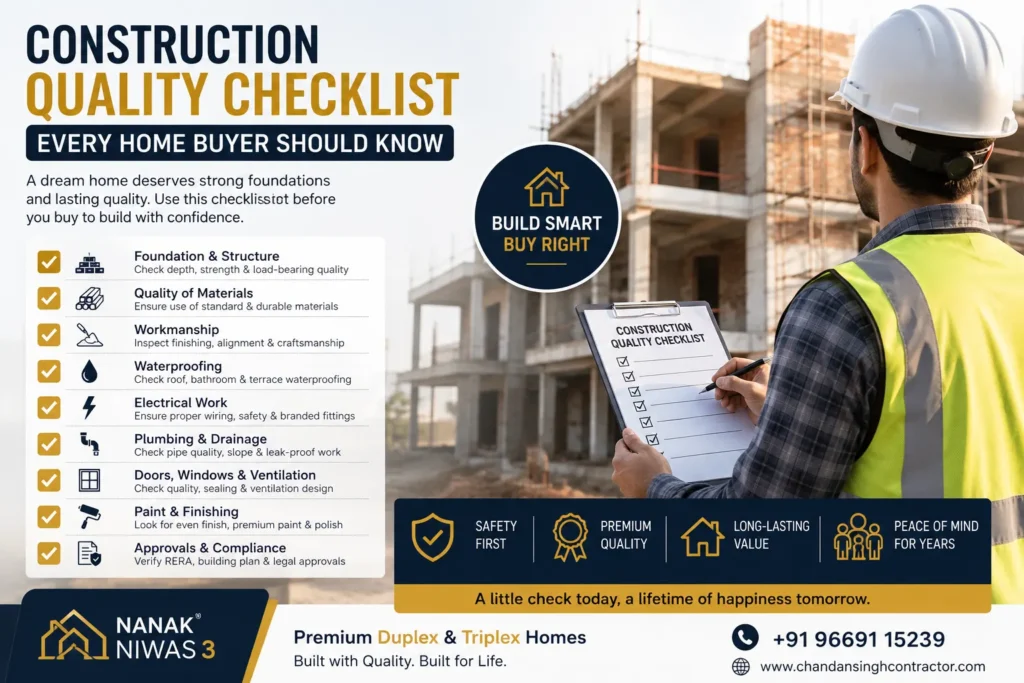
Home Buyer Guide Construction Quality Checklist Every Home Buyer Should Know A simple, practical checklist to inspect your plot, home, or flat before you pay — from Chandan Singh Contractor, building trusted homes in Bhopal since 1972. Quick Overview Before you finalize any property, walk through it and check the foundation, walls, roof, plumbing, electrical wiring, doors, windows, and flooring. This checklist helps you catch cracks, dampness, or weak workmanship early — so your investment stays safe for decades, not just years. You’ve saved for years. You’ve picked the perfect location. The plot or flat looks beautiful on paper. But here’s the truth — brochures don’t show you cracked walls, leaking pipes, or weak cement work. A home is not just paint and design. It’s steel, cement, sand, and hundreds of small decisions made by workers you’ll never meet. That’s why every home buyer needs a simple construction quality checklist — one you don’t need an engineering degree to use. Why a Construction Quality Check Matters Most buyers focus on location, price, and interiors. Very few actually check construction quality. This is risky because: Poor quality construction can lead to cracks, leakage, and dampness within 2–3 years Weak electrical work can become a fire hazard Bad plumbing means costly repairs after possession Structural issues can affect the resale value of your home Fixing problems after moving in costs far more than catching them before payment Construction Quality Checklist: What to Inspect 1Foundation and Structure Ask for the structural design certificate and soil test report Check if the builder used RCC (Reinforced Cement Concrete) framing Look for visible cracks near the base of walls or columns Confirm approval from the local municipal authority 2Walls and Plastering Tap the walls gently — a hollow sound may mean poor plastering Check corners and ceiling joints for hairline cracks Look for dampness or water stains near bathrooms and terrace Walls should feel smooth and even, not bumpy 3Roof and Waterproofing Ask about the waterproofing method used on the terrace Check the ceiling for seepage marks or discoloration Visit the site after rain for the best real-world test Confirm proper slope for water drainage on the terrace 4Doors and Windows Open and close every door and window — they should move smoothly Check for gaps that let in dust, rain, or insects Inspect hinges, locks, and handle quality Windows should have proper sealing against water leakage 5Flooring Check tiles for cracks, hollow sounds, or uneven levels Tap different areas with a coin — a hollow echo suggests poor bonding Skirting (where wall meets floor) should be neat and firm Bathrooms and balconies should slope slightly for drainage 6Electrical Wiring and Fittings Ask if ISI-marked wires and switches were used Check power point placement in each room Test switches, fans, and lights if power is active Confirm proper earthing and MCB (circuit breaker) panel 7Plumbing and Water Supply Check water pressure in taps and showers Look under sinks and pipe joints for leakage or rust Confirm separate lines for drinking and general water, if applicable Ask about pipe quality used (CPVC or UPVC preferred) 8Paint and Finishing Paint should be even, without patches or brush marks Check corners, switchboard edges, and window frames for rough finish Ask about paint type and warranty 9Common Areas and Amenities Check lift quality, lobby flooring, and staircase railings Inspect fire safety equipment — extinguishers, alarms, exits Check parking area construction and drainage Confirm common area lighting and CCTV are functional 10Documentation and Approvals Occupancy Certificate (OC) from local authority Completion Certificate RERA registration (in applicable regions) Building plan approval matching actual construction Quick Checklist Table Area What to Check Foundation Cracks, structural approval, soil report Walls Plastering, dampness, hollow sound Roof Waterproofing, seepage, drainage slope Doors/Windows Smooth movement, sealing, hardware quality Flooring Cracks, hollow tiles, skirting Electrical ISI wiring, earthing, power points Plumbing Water pressure, leakage, pipe quality Paint Even finish, no patches Common Areas Lift, fire safety, parking Documents OC, Completion Certificate, RERA Tips Before You Finalize the Deal Visit the site multiple times, including once after rainfall Take a contractor or civil engineer friend along if possible Talk to existing residents in the same project, if any Don’t rely only on show flats — inspect the actual unit Keep a written record of issues and get them fixed before final payment Conclusion A home is not something you buy every year. It’s a long-term investment in comfort, safety, and peace of mind. Taking a little extra time with this construction quality checklist can protect you from years of hidden repair costs and stress. Don’t just fall in love with the design — check what’s behind the walls too. Planning to Buy a Plot in Bhopal? Talk to Chandan Singh Contractor — RERA approved, legally clear titles, trusted by 400+ families since 2014. Call +91 96691 15239 Frequently Asked Questions What should I check before buying a newly constructed house? Check the foundation, walls, roof waterproofing, electrical wiring, plumbing, flooring, and paperwork like the Occupancy Certificate before finalizing the purchase. How can I check the quality of construction myself without an engineer? Look for visible cracks, tap walls and floors for hollow sounds, test doors and windows for smooth movement, check for dampness, and test water pressure and electrical points. What documents should a builder provide for a quality home? A builder should provide the Occupancy Certificate, Completion Certificate, approved building plan, and RERA registration details, where applicable. Why do walls develop cracks in new buildings? Cracks often happen due to poor quality cement, incorrect curing time, weak plastering, or structural settlement. Hairline cracks in plaster are common, but wide or spreading cracks need expert inspection. Is it necessary to visit the site during rainy season before buying? Yes. Visiting during or after rain helps you spot roof leakage, wall seepage, and drainage problems that are hard to notice in dry weather. What is the ideal water pressure test for a new home? Turn on taps and showers